
From Baby Oil to SPF: Pool Sun Safety Tips for Skin Cancer Awareness Month
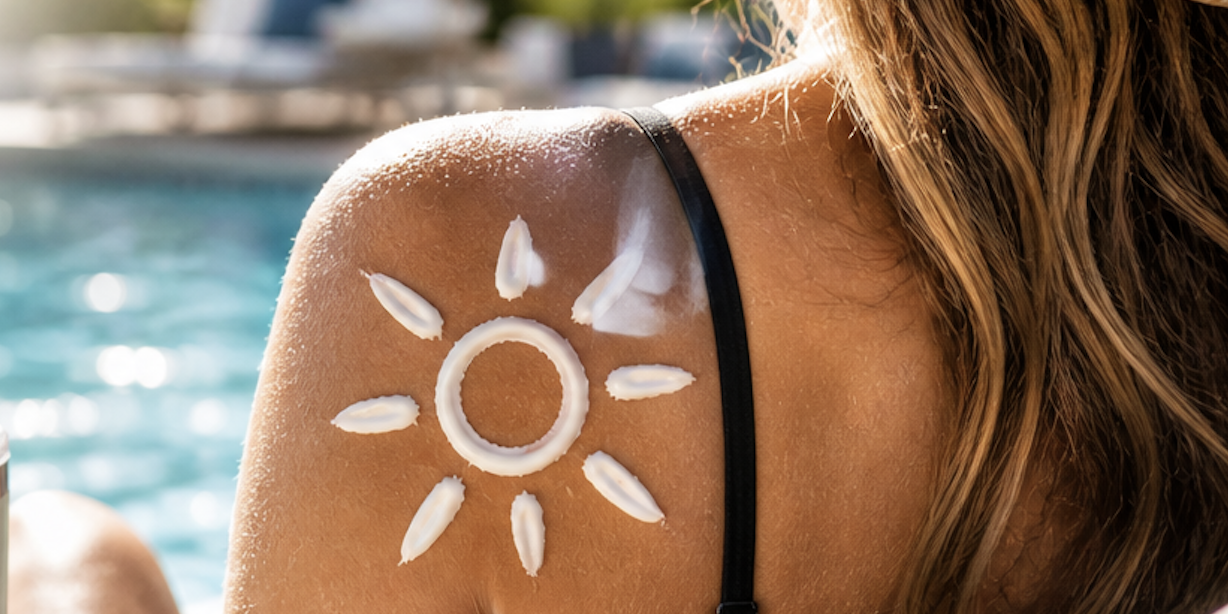
May is Skin Cancer Awareness Month. And yeah, we need to talk about it.
I'm going to be real with y'all for a second. As an elder millennial, I'm the first to admit that I haven't always been vigilant about sun care. When I was a teenager, we lathered on baby oil and lay in coconut-scented UV coffins, crisping our skin in the name of looking hot. Short-term goals, long-term consequences. Now we've all got dark spots, wrinkles, and new little decorations popping up all over our skin like unwanted souvenirs from Spring Break '04.
At 30, I asked my very German and thickly accented dermatologist if I had liver spots because WHAT were these dark spots all over my arms and the back of my hands? She shrugged at my panic and deadpan stared at me as she delivered my diagnosis: "You are old."
Reader, I was not old. But thanks to decades of unprotected sun exposure, my décolletage and hands tell a very different story than my birth certificate. They're aging faster than they have any right to, and I know I'm not the only one.
So here we are. Running a pool company in Pensacola, Florida—a place where the sun doesn't just shine, it commits—and it would be pretty irresponsible of us not to talk about what all that glorious sunshine is actually doing to your skin while you're floating around enjoying it.
The Stuff They Don't Put on the Sunscreen Bottle
You probably know that skin cancer is the most common cancer in the U.S. But here are some facts that might stop you mid-float:
Your skin starts taking damage in 15 minutes. Not an hour. Not "after you start to feel it." Fifteen minutes of unprotected exposure and the UV rays are already doing their thing. And here's the kicker—it doesn't matter if it's cloudy or cool. UV rays don't care about the temperature. They do the damage regardless.
Five or more blistering sunburns between the ages of 15 and 20 increase your melanoma risk by 80%. Eighty. Percent. For those of us who spent our teenage years achieving what we thought was a "base tan" (spoiler: there's no such thing as a safe tan), that number should make you sit up straight on your pool lounger.
Even one indoor tanning session increases your risk of squamous cell carcinoma by 67%. Remember those tanning beds I mentioned? The coconut-scented UV coffins? Yeah. One session. Sixty-seven percent. And women under 30 who tan indoors are six times more likely to develop melanoma. We didn't know that in 2002. We know it now.
You can develop melanoma under your toenail. It's called subungual melanoma, and most people who get it assume it's just a bruise that won't go away. If you've got a dark spot under a nail that doesn't grow out as the nail grows, get it checked. Melanoma can also show up in places you'd never expect—not just sun-exposed skin.
70-80% of melanomas show up on normal-looking skin, not in existing moles. So that "I don't have any weird moles" comfort? Not as comforting as you think. Regular skin checks—by you and by a dermatologist—matter more than most people realize.
What the Gulf Coast Does to This Problem
Living in the 850 means we're outside more than most. Between the pool, the beach 20 minutes away, yard work, Friday night football, Saturday morning farmers markets, and just existing in a place where it's warm nine months out of the year, our cumulative sun exposure is massive.
And here's what a lot of people don't think about: pool time is sneaky sun time. You're wet, which means sunscreen washes off faster. The water reflects UV rays back up at you, increasing exposure. And you're usually having such a good time that reapplying every two hours is the last thing on your mind. (Especially when the kids are doing cannonballs and someone needs to go inside for more ice.)
The Gulf Coast humidity also gives people a false sense of security. "It's overcast today, I'll be fine." No. UV rays penetrate clouds. You can absolutely get a sunburn on a gray day in Pensacola, and most of us have the surprise burns to prove it.
The Zones We All Forget
Here's my personal public service announcement, earned the hard way: your face is not the only thing that needs sunscreen.
Your hands are almost always exposed—driving, pushing a stroller, grilling out, walking the dog—and they're rarely protected. The skin on the backs of your hands is naturally thin, and over time, the sun breaks down collagen and elastin faster there than almost anywhere else on your body. That's why hands are one of the first places to show age spots, crepey texture, and visible veins.
Your chest and décolletage? Same story. Most of us are pretty good about our face, but stop right at the jawline. Meanwhile, the skin on your chest is thinner, has fewer oil glands, and gets just as much sun as your face—especially in Florida, where V-necks and tank tops are basically a uniform from March through November. Fewer than 40% of women consistently apply skincare products to their neck, chest, or arms.
Trust me. Learn from my prematurely-aged décolletage. Bring that sunscreen south of your chin.
What You Can Actually Do About It
This isn't a lecture. We're not going to tell you to stay inside all summer—that would be deeply hypocritical coming from a pool company. But a few simple habits go a long way:
Wear SPF 30+ every single day. Not just pool days. Not just beach days. Every day. Daily sunscreen use reduces your risk of melanoma by 50% and squamous cell carcinoma by about 40%. That's not nothing. That's a shot glass worth of sunscreen (literally—that's how much you need for full body coverage) standing between you and a serious problem.
Reapply every two hours, and immediately after swimming or sweating. Set a timer on your phone if you need to. Make it as routine as checking the grill temp.
Don't skip your hands, chest, ears, and the back of your neck. These are the spots that'll age you faster than anything, and they're the ones most people forget.
Get a yearly skin check. Find a dermatologist—even if they're German and brutally honest—and let them look you over once a year. When melanoma is caught early, the five-year survival rate is 99%. When it's not? That number drops fast.
Teach your kids now. UV damage is cumulative, meaning it builds over time, starting in childhood. The sunscreen battles with your six-year-old at the pool? They matter more than you know.
Float Responsibly, Y'all
We want you in that pool. We want you floating, splashing, grilling, hosting, doing cannonballs with your kids, and falling asleep on a raft on a Tuesday afternoon. That's what pools are for. That's what living here is all about.
But we also want you doing it for a long, long time. So slather up. Wear the hat. Sit under the umbrella for a round. And maybe—just maybe—skip the baby oil.
Your 50-year-old self will thank you. Mine is already writing strongly worded letters to 2003 me, and trust fam, I do not appear to get friendlier as I age.
May is Skin Cancer Awareness Month. If it's been a while since your last skin check, this is your sign. Find a dermatologist, schedule an appointment, and get checked out. The Skin Cancer Foundation has great resources at skincancer.org. And if you need us? We'll be out here keeping your pool clean—in our Hawaiian shirts, with our SPF on.
