
Can I Pause Pool Service in Winter?
Every November, somebody asks us the same thing. "We're not swimming until April. Can we just pause service and pick back up in the spring?"
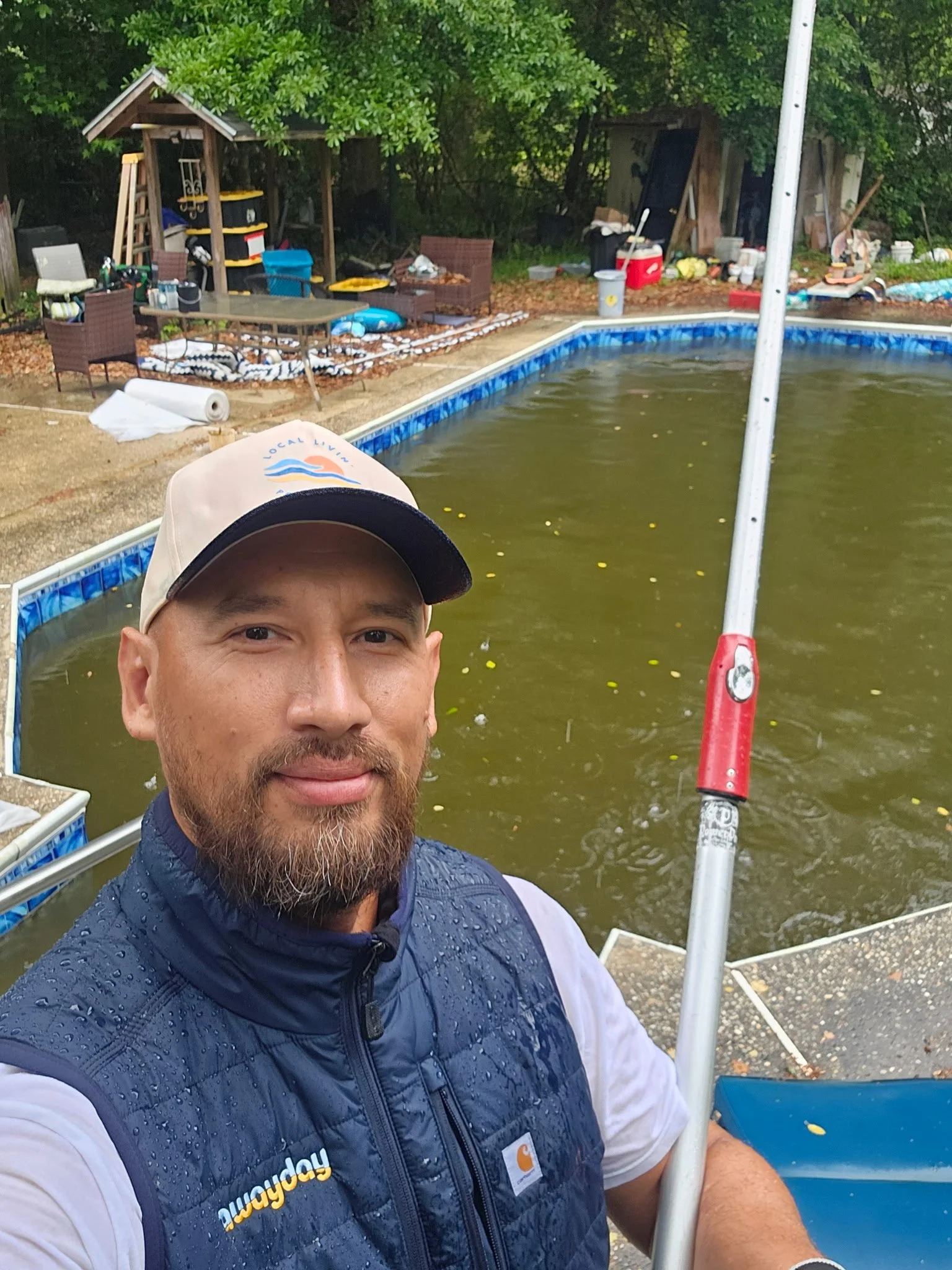
It's a fair question. You're looking at a pool nobody's touched since October, the water's cold, the cover's on or it isn't, and paying for weekly service feels like paying for a gym membership after January. We get it.
But here's the thing. Most of the winter pool advice out there was written for Ohio. Up north, you close a pool. You drop the water level, blow out the lines, put a real cover on it, and walk away for five months. That's a whole different animal from what happens in Pensacola.
We don't close pools here. We can't, really. And a pool that stays open needs to be paid attention to, even when nobody's getting in it.
What Actually Happens to Your Pool November Through March
The water gets cold, which slows a lot of things down. That part's real. Algae doesn't grow as fast at 58 degrees. Chlorine doesn't burn off as quickly because the sun's lower and the days are shorter. Your pool genuinely needs less chemical than it does in July.
Less isn't none, though. And a few things get worse in winter, not better.
The debris doesn't stop
Oak trees are the gift that keeps on giving. Live oaks drop leaves in late winter and early spring — right when everybody's stopped paying attention. Then February hits and the pollen shows up and turns everything that yellow-green color you know too well. If nobody's skimming and brushing through that stretch, you've got organic material sitting on the bottom of a cold pool eating chlorine all winter.
Chemistry drifts, just slower
Cold water holds chemistry differently. pH tends to climb. Alkalinity shifts. Calcium can start scaling on tile and inside your salt cell if the balance goes sideways and nobody catches it. None of that is dramatic on any given week, it's a slow creep that shows up as a problem in March.
Freeze nights are the real risk
We get a handful of hard freezes most winters. Not many, but enough. Water in a pump, filter, or exposed plumbing that isn't circulating can freeze and crack something expensive. The fix is simple, run the pump through the freeze, but somebody has to know it's coming and actually do it.
The Part That Costs Money
A cracked pump housing or busted PVC from one freeze night runs more than a full winter of service. And it always happens on the coldest night of the year, when every pool and plumbing company is already booked.
The Math Nobody Runs
Here's what usually happens when somebody pauses for the winter.
They save four or five months of service. Great. Then April rolls around, the water's warmed up, and there's five months of oak debris and pollen sitting on a pool that's been quietly running out of chlorine. It's green, or it's headed there. The filter's loaded up. The salt cell's scaled.
Now you need a green pool recovery, which means a full deep clean, a shock treatment, multiple return visits, and probably a filter clean. That's most of what you saved and likely then some, not to mention, you spent the first two weeks of pool season looking at water you can't swim in.
We'd rather not do that to you. Honestly, we'd rather not do it at all. Fact: nobody enjoys a green pool recovery, including us.
What Winter Service Actually Looks Like
It's lighter. It should be. Your pool isn't working as hard, so we aren't either.
Chemistry tested and adjusted (usually less chemical than summer, sometimes a lot less)
Skimming and brushing (especially through leaf drop and pollen season)
Filter pressure checked, backwashed or cleaned (when it needs it)
Equipment eyeballed for the stuff that goes wrong in cold weather
Freeze protection confirmed before a cold snap
If you're determined to go it alone: run your pump every day even in winter, keep chlorine in the water, brush weekly, and run the pump continuously any night it's forecast below 34. That covers most of it. Call us if the water starts looking cloudy or the filter pressure climbs more than a few pounds over normal.
The Honest Version
Could you skip service December through February and probably be fine? Some pools, some years, sure. Shady yard, no oaks, mild winter, and you stay on top of chemistry yourself, you might come out okay.
But a pool is a body of water sitting outside in a climate that never fully quits. It doesn't take the winter off, so it's hard to fully take the winter off from it. The pools that give people the least trouble are the ones somebody's laid eyes on every week, year-round.
That's the whole pitch. If you want to talk through what makes sense for your setup and your budget, we're happy to. We'll tell you if pausing is the right call for you.
See y'all out there. Even in January.
